

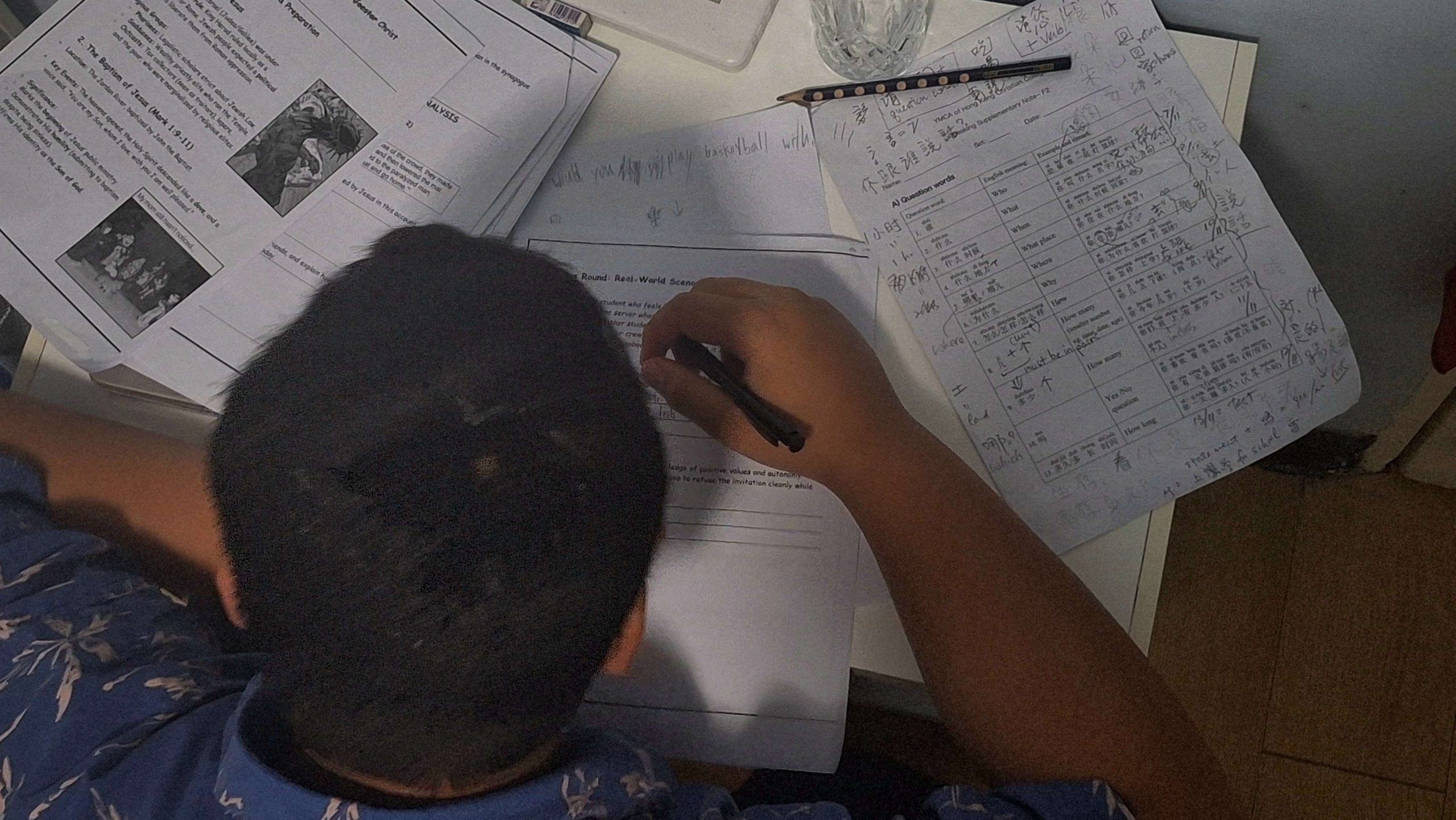
Time and again, you will hear news of South Asian citizens moving abroad because of the lack of proper, sustainable employment available in their home country. Many flock to Western countries because of the pivotal values brought about by the American Dream—values, that promote this idea of how moving to the Western world equates to success. But for a long time, Asia itself was a major target for those less unfortunate to look for work at. Particularly, I talk of Hong Kong, which has seen a large influx of immigrants, especially from South Asia.
This can be boiled down to reasons such as closer proximity to home soil or military stationing during British occupation. Since the implementation of the 2023 labor scheme, Hong Kong has imported over 37,000 non-local workers across its various industries. However, even before this implementation, there have been many more who have come here before that, those who have built their lives while they build the city.
Back in the earlier days, many Nepalese and South Asian parents moved to Hong Kong with a singular focus on working intensely and earning enough money to either send home or build a nest egg. From 2024 to 2026, around 9% to 10% of the total labor force comprises construction workers, and similar roles such as food delivery and Uber drivers likewise make up a highly visible, disproportionately large share of South Asian workers who rely on platformed gig work (commissions) because of systemic language barriers in mainstream employment. Many of these immigrants—whom you will still see around construction sites, delivering food to doorsteps—are relegated to physical labor because they lack proper education, since most of them hail from far-flung rural villages outside the capital.
The dedication and work ethic these workers, many of them now parents with the passage of time, show as they strive for a more sustainable future is more than praiseworthy. Circumstances have forced them to work tirelessly to sow seeds for future generations to benefit from, and I respect the dedication they show in nurturing that seed. Many people are forced to make do with the cards they are dealt, and I acknowledge that too. I rarely see my own landlord and landlady (both Nepalese) at home; they leave as early as 5 am to start their work and don’t return until late at night, and that is likely the case for the tens of thousands of other families building their own lives here.
But I feel it is necessary to mention that, although the intention is noble, it leaves the children they’re raising in this environment facing many issues.
The second generation of Hong Kong Nepalese consists of kids whose parents came here for work and ended up raising them in this environment while continuing their work. Having spent a substantial amount of time in Hong Kong, I have come to see how much the children are affected by the system; be it through the education system, both in and out of school, or even how it affects their own personal development while growing up. Most diasporic novels you may have read follow a similar structure and present conflict around identity formation in this generation, which also, admittedly, contributes to the problems they face. Still, we need to understand that this is not the only case.
And the first of these issues I noticed is the overall cultural isolation in the school environment itself.
Now, I haven’t been to a Hong Kong school personally, so I don’t know its inner workings. But from what I have learned and understood, the education system has created these “designated schools” for most second-generation South Asians—schools where the student body is almost entirely composed of this group. And efforts have been made to support these students and preserve their paternal roots, I will not deny that, as there are courses and curricula built around teaching them to speak their paternal language—astonishingly, with cases like Urdu going as far as being recognized as part of Hong Kong’s DSE curriculum to encourage students to pursue their heritage.
The issue is that because these children are grouped away from local Chinese peers, they have zero opportunity to practice Cantonese naturally. Even when Chinese-speaking students make up a substantial portion of the student body, non-locals tend to stick to their own groups.
Most of these schools are also designated as “Band 3” schools, relatively lower-tier schools, where most parents end up sending their children because the government fully subsidizes their education.
While this does save money, it also inevitably creates an invisible wall for the student concerned. See, they already spend 8 hours a day physically in Hong Kong, but culturally, they are trapped inside an isolated bubble. They stay in their groups and have very rare inclination of exploring outside because, first, it is more comfortable that way, and second, they struggle to communicate and express themselves in another language. So, when they step outside school, the cultural differences feel like a massive shock because the school didn’t actually integrate them into the local community. A common sentiment shared by many of the students I’ve talked to—and something which I find harrowingly concerning (and gloomy at the same time)—is, “I’m part of Hong Kong, but I don’t feel I am a part of its community.”
And this transitions to the next problem it raises: the loss of mother tongue.
As aforementioned, most schools incorporate non-native language learning into their curriculum, based on their student body, but it isn’t mandatory for most for most to attend these classes. Even those who take Urdu for their DSE exams (which is the final secondary examination for the locals) have admitted they did so for easier credit rather than genuine interest in the language.
Alongside this, the current hyper fixation on Chinese and English-orientated curricula forces most kids to abandon their mother tongue, since even parents nowadays are geared more toward making their kids learn English in order to “internationalize themselves”—because again, adhering to Western standards apparently guarantees better standings in life. And so, because their heritage languages aren’t structurally validated in the classroom, because its importance and usage are diminished in their eye, children sub-consciously view them as “less valuable” than English or Cantonese, which has dramatically accelerated the language’s disappearance.
I have encountered situations where, during tutoring classes, I have to act as the translation mediator between children and their nannies because the former can only speak English and the latter only Nepali.
This isn’t even mentioning the issue of learning Chinese. I previously mentioned the lack of exposure to the language because of limited exposure to the culture. In a place like Hong Kong, especially in recent years, a lack of advanced written Chinese literacy has shown to stand as a hard barrier to university admissions, let alone getting employed. Even for those international students coming to Hong Kong for their undergraduate studies, learning and speaking Chinese—at the very least, at a rudimentary level—is slowly becoming a mandatory requirement in almost all facets of employment.
Such a precedent creates immense anxiety for parents, many making it necessary for their children to take additional supplemental Chinese classes after school every day to satisfy the educational and societal requirements, which not only drives them to push their children harder, not only causes their native tongue to be completely forgotten in the sidelines, not only creating a tense loop of stress at home, but it also further limits the already constrained time they get to spend outside of their education.
At the rate it’s going, I fear the mother tongue could be completely forgotten by the time the next generation of Hong Kong Nepalis arrives.
Which—returning to my initial point—because of this lack of communication, inevitably, you see that a deep cultural divide grows inside the home.
Imagine this: A child wakes up early at 6 am to prepare for school. But where they expect to find their parents, only their helper is waiting, since their parents have long since left for work.
Who picks them up at school? Either the same worker picks them up, or they walk home on their own. What do they do when they get home? Finish their homework or get sent to a tutorial center. What happens when their parents finally arrive home? They’re too tired and immediately go to sleep. And the cycle repeats over and over.
You can see the issue here; a child feels neglected because they rarely see their parents. Children have to spend over 8 hours at school, additional hours at tutorial centers—and this is not even including the extra afterschool sessions, or the time spent doing their homework.
Parents themselves are too busy at work to truly connect with their children and understand them, their hobbies and interests, their likes and dislikes, on a deeper level (passions, which, mind you, themselves rarely have time to manifest because of the tight schedule). And though the latter’s intentions are noble—which I have and cannot stress enough—it inevitably causes the children to grow up holding Hong Kong values and facing local identity crises. At the same time, the parents retain traditional home-country expectations, and because they don’t have the shared language or time to talk, they view their kids’ struggles as being “disobedient” or “lazy”, while the kids feel entirely abandoned and misunderstood.
Again, I don’t mean to blame the parents. I understand their struggles—having seen it firsthand myself through the students I have tutored here—and their purpose of coming here. The grueling structural demands of Hong Kong’s labor market force parents to sacrifice hours, days, weekends, of emotional connection and paternal guidance just to secure their children’s financial survival. But the problem is, most children aren’t yet capable enough of understanding those sacrifices. All they end up seeing—from the accounts shared with me—is that their parents seemingly don’t care for them.
Which is one of the worst things a child can feel growing up.
Especially in an environment where they already feel disconnected.
All of this may seem overwhelming, and one would ask where—or even if they can start solving this issue. And the answer I would suggest may be obvious and sound simple in concept, but it’s simply to make time for your children. Children, especially those in their primary formative years.
Taking them to their favorite restaurant, or simply spending time with them at home, makes a world of difference for the child because it shows you care, that you are interested in what they are doing, and that is often the validation a child needs and remembers years down the line.
Yes, you need to work to sustain your family. I understand, especially for those in the heavy labor field, the body is too tired to do anything during the break days. But making time for your children is necessary to understand their struggles and where you can help them, or even for the mere fact of spending time with them, because you won’t have that when they grow up.
Some of my own fondest memories come from those simple moments spent with my mum and dad. And its proof that we mattered to someone, that we were seen, that we were loved.
That is the future worth working toward. That is the seed worth nurturing. And it begins, as all things do, with time.